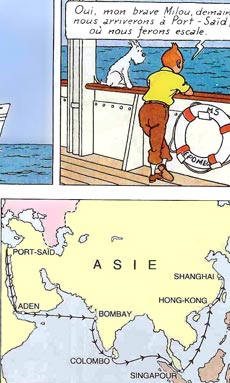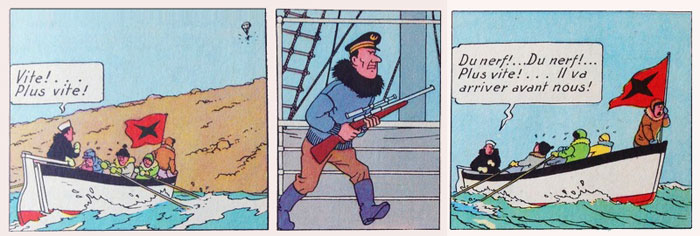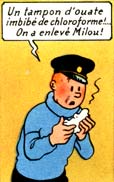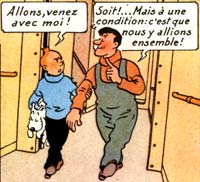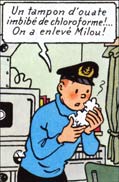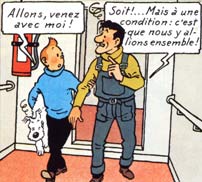

| The images on the left were published in the Belgian magazine "Le Petit Vingtième" between 1930 and 1940. | |
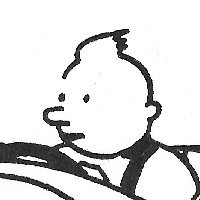 Tintin 1930 |
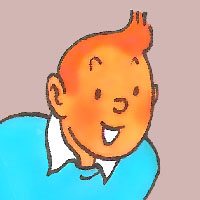 Tintin 1976 |
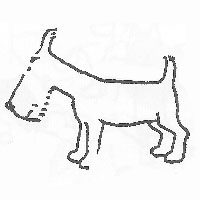 Snowy 1930 |
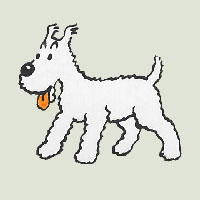 Snowy 1946 |
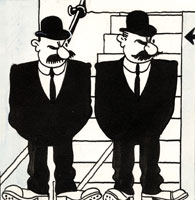 Thom(p)son 1934 |
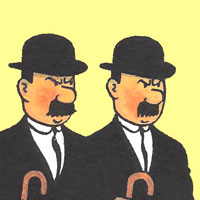 Thom(p)son 1955 |
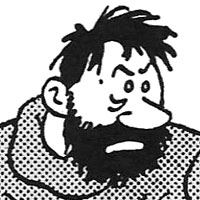 Haddock 1940 |
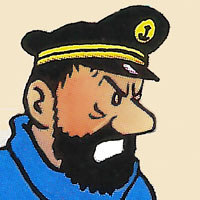 Haddock 1955 |
| All characters in another page | |
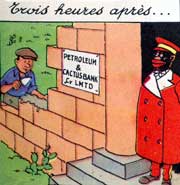
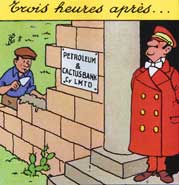
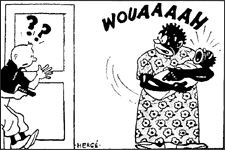
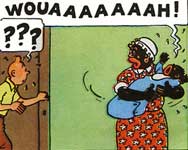
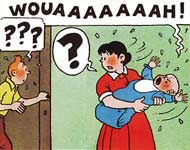
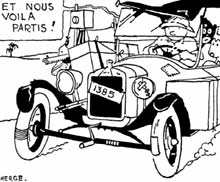 Congo first version (1930-31) |
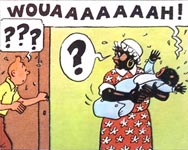
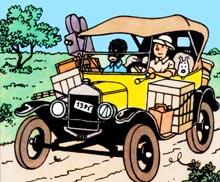 Congo second version (1946) |
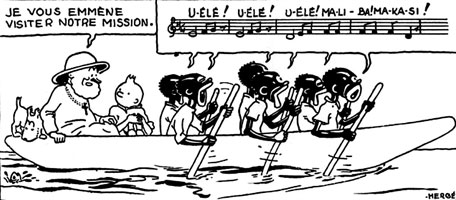 Congo first version |
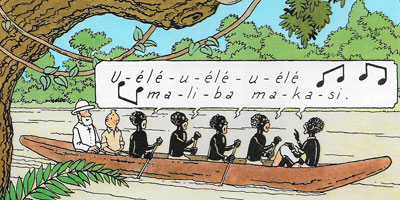 Congo second version |
| Was Hergé a racist? | |
| Second example: Tintin in America. Several of the cars have been re-drawn. | |||||||||||||||||||||||||
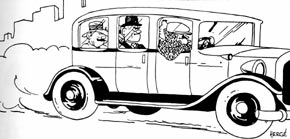 America first version (1931-32) |
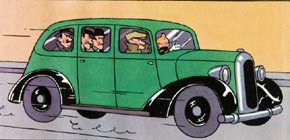 America second version (1946) |
||||||||||||||||||||||||
|
|||||||||||||||||||||||||
|
For the album version of 1946, all frames have been redrawn without exception, and many pieces of text have been modified, although Hergé did not touch the scenario. Here the scene of the burning prairie. The funny picture of the rabbit riding the tortoise has disappeared, and so has the vulture. |
|||||||||||||||||||||||||
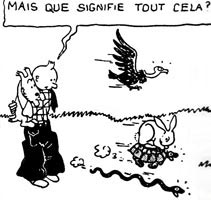 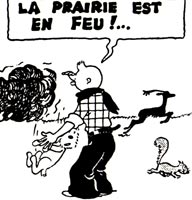 First version |
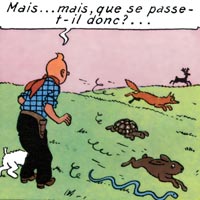 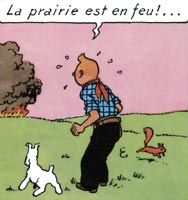 Page 38, 1946 |
||||||||||||||||||||||||
|
The next two pictures are do not appear in the mentioned versions. They are probably extracted from the "Petit Vingtième" or the "Journal de Tintin". Click to enlarge. |
|||||||||||||||||||||||||
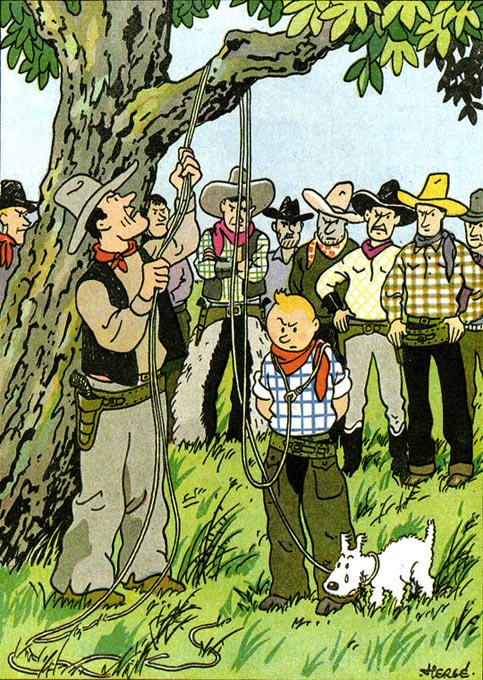 |
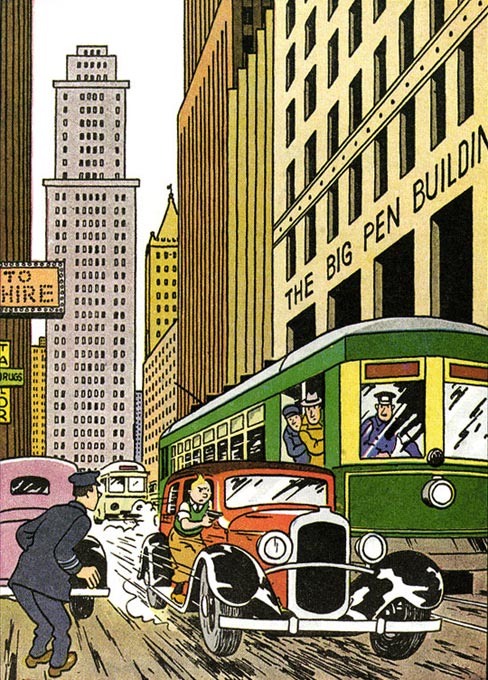
|
||||||||||||||||||||||||
| |||||||
|
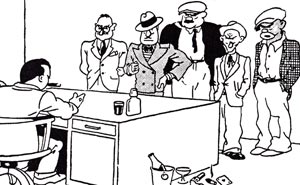
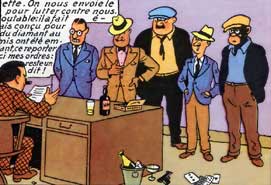
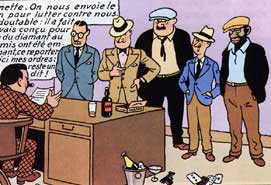
Curiously, page 15 contains a scene similar to that of the "Black Gold" with an Arab chief in his tent. The initial publication in strips in 1934 is rather different from the more recent two album versions. In the three pictures shown here, the album shown to Tintin is Tintin in America in the initial version, Tintin in the Congo in the 1955 album version and Destination Moon in the last album version. |
|||||||
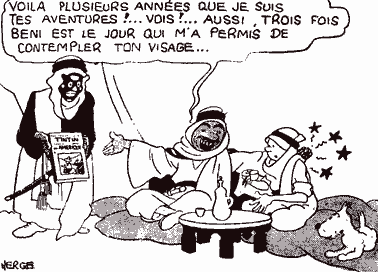 Petit Vingtième initial version page 31, 1934 |
|||||||
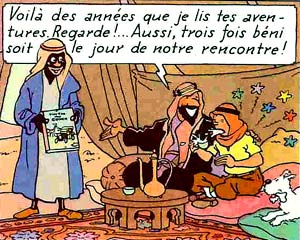 Album version 1 page 15, 1955 |
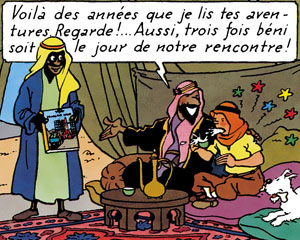 Album version 2 page 15, 1970 |
||||||
|
On page 52, the first edition in colour shows frame C1 with the maharadjah, Tintin and Snowy. But the dog had been kidnapped by Sikhs and then recovered by Thomson and Thompson on page 50 and would appear again only on page 57. This error was corrected in the following editions. |
|||||||
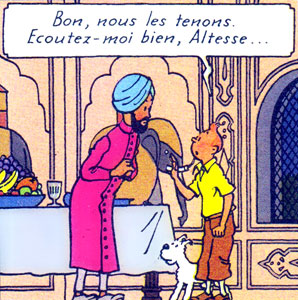 Album version 1 page 52, 1955 |
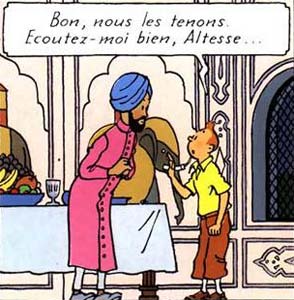 Album version 2 page 52, 1970 |
||||||
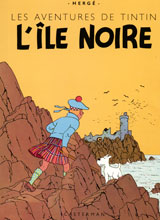
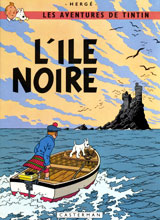
| One of the most thoroughly re-worked albums is The Black Island. The second version has been coloured, and the lettering has been changed, but the pictures themselves are essentially identical. In the third version, on the contrary, the Hergé studio has redrawn all pictures, with finer details. The attitudes of the characters are now wonderfully mastered. | |
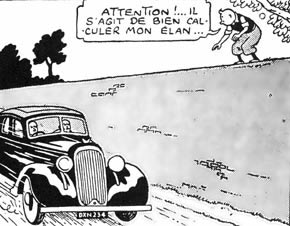 First version (1938) |
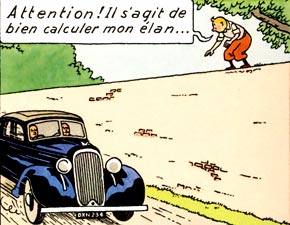 Second version (1943) |
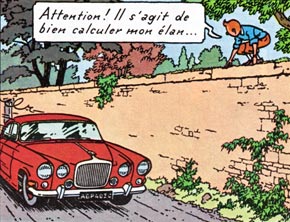 Third version (1966) | |
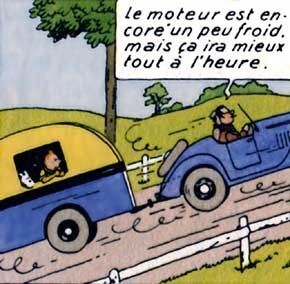 Second version (1943) |
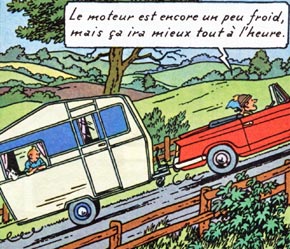 Third version (1966) |
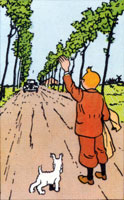 |
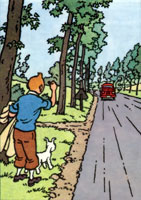 |
| The clothes, as shown on pages 6 and 7: in the new version, Tintin is still wearing golf trousers, but a blue pullover has replaced the coat. | |
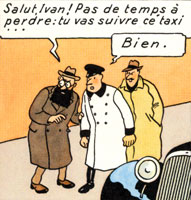 |
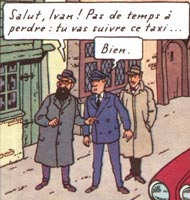 |
| Ivan, the chauffeur of the big car, still has a uniform with a cap, but the white overcoat typical of the early 20th Century has disappeared | |
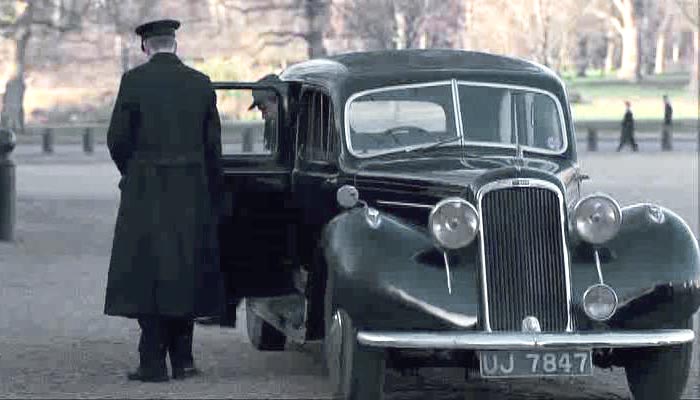
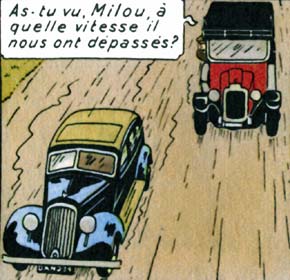 First version: the taxi is probably an Austin, and the big car a Humber Pullman of 1936.
|
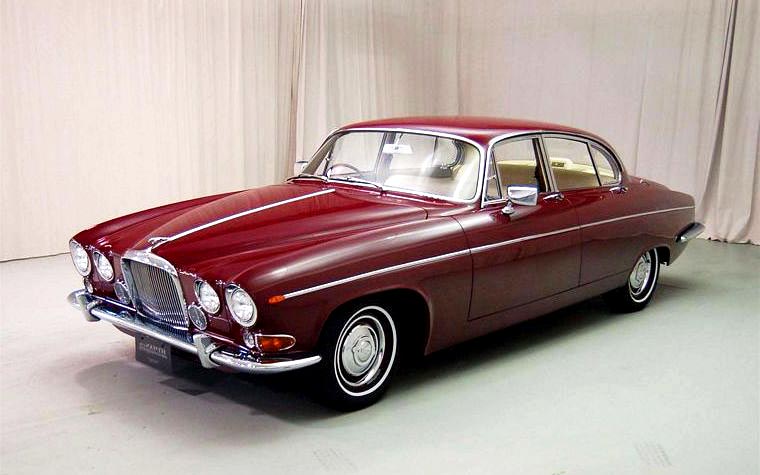
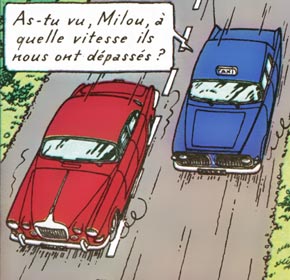 Second version: the taxi is a Ford Zephyr, and the big car a Jaguar Mark X.
|
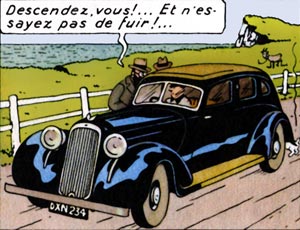 1936 Humber Pullmann |
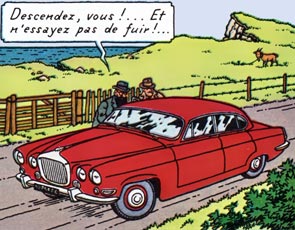 Jaguar Mk X 1961-68 |
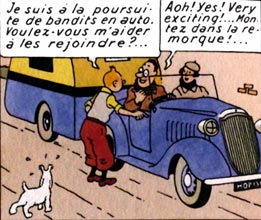 1935 Vauxhall |
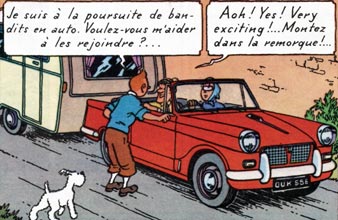 Triumph Herald 1959-70 |
| The railway has also been updated: | |
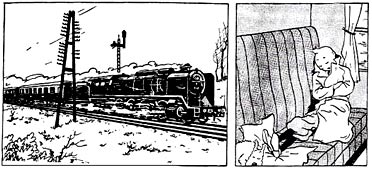 |
|
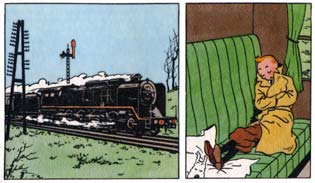 |
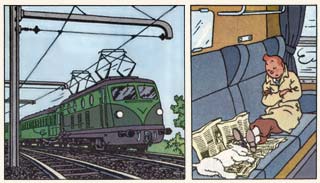 |
| ...and so have the aeroplanes, of which we have an example here: | |
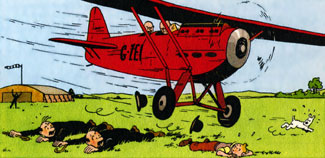 |
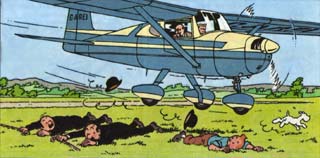 |
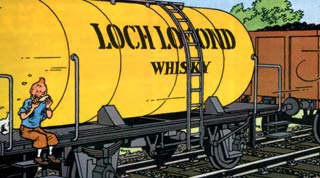
| The Johnnie Walker whisky is now Loch Lomond: | |
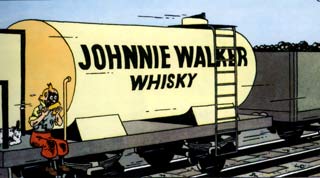 |
 |
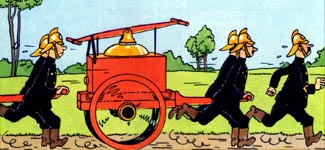
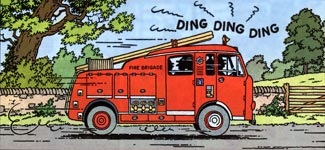
| The Eastbury fire brigade got new equipment: | |
 |
 |
| The backgrounds are more detailed: | |
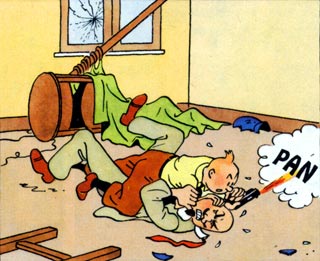 Page 16, 1943 |
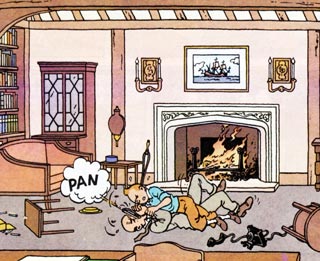 Page 16, 1966 |
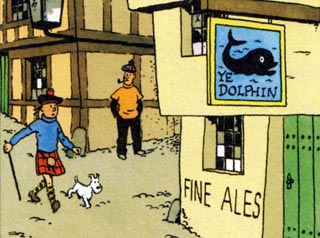 Page 41, 1943 |
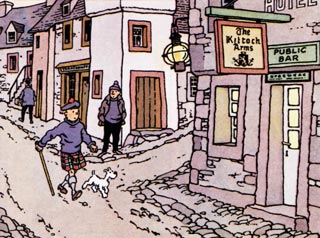 Page 41, 1966 |
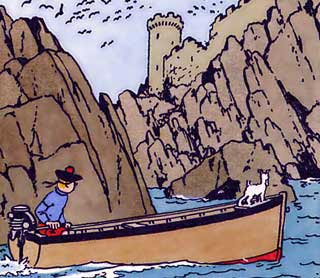 Page 43, 1943 |
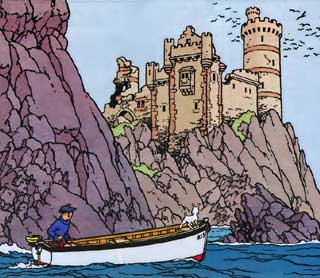 Page 43, 1966 |
| Propeller vs. jet aeroplane in the final image: | |
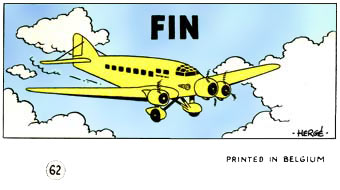 |
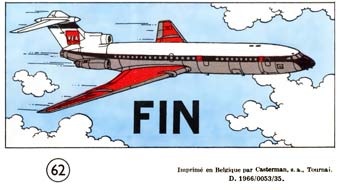
|
| Just one example showing the evolution between the version published in the "Petit Vingtième" and the final album. | |
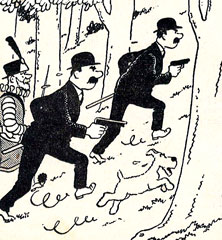 First version (1938) |
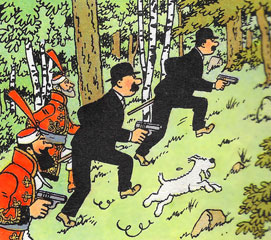 Album p.48 (1947) |
| The first French version of the album, in black and white, is dated 1941. The initial colour version was published in 1943. My own album has a © 1947. Many changes have been made in the 1950's or 60's to make the album more "politically correct": for instance, some scenes where Captain Haddock is drinking whisky from the bottle have been "softened". The scene is unchanged globally, though. | |
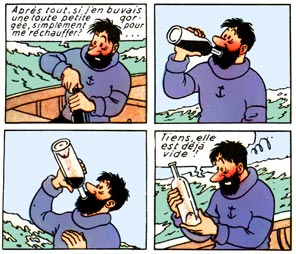 Page 19, 1947 |
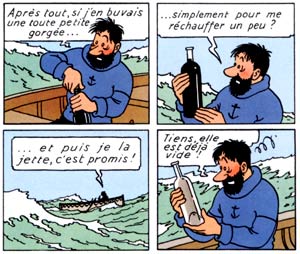 Recent edition |
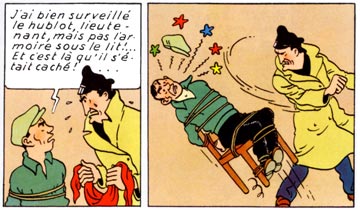
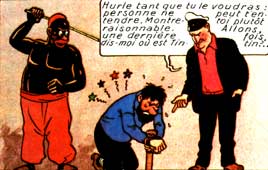
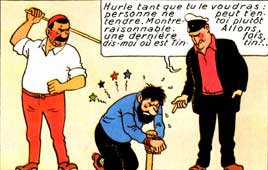
| Similarly, the Black men here have been replaced by a Chinese and a Turk to please the American censorship. At the time it was not accepted in the USA to have Blacks and Whites sharing anything, even comic strips.... | |
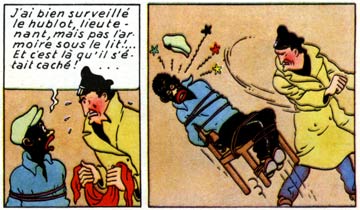 Page 18, 1947 |
 Recent edition |
 Page 53, 1947 |
 Recent edition |
| The first text below says "stop that Negro". The last edition says "stop that man" (I highlighted the fragment myself). | |
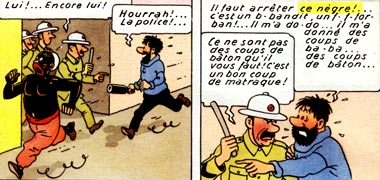 Page 58, 1947 |
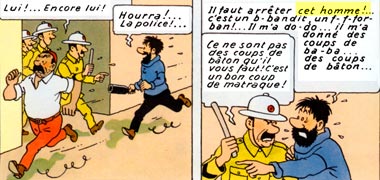 Recent edition |
| In the first version (1942), page 47, Tintin landed on the island in a rowboat sporting the US stars and stripes banner. In recent issues, the flag has been replaced by a more neutral version, not pertaining to a known country. | |
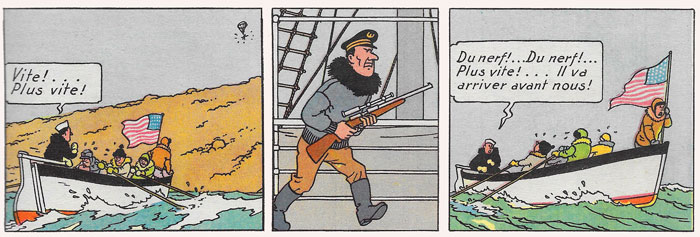 Page 47, 1947
|
"The seven crystal balls" was initially published in the Belgian daily "Le Soir", but suspended in September 1944 when Brussels was liberated. It was resumed two years later in the "Le journal de Tintin" at the time the magazine was created, but under the new name of "Le temple du soleil" (later translated as "Prisoners of the sun"). The publication was done in landscape format, which later obliged, Hergé to redesign entirely its layout for the corresponding album in portrait format, with lots of cropping and even removal of some of the boxes. The first page in the "Journal de Tintin" corrresponds to page 50 of the album "The seven crystal balls", where Tintin leaves the hospital. This page will never appear in either albums. Here is its first strip:
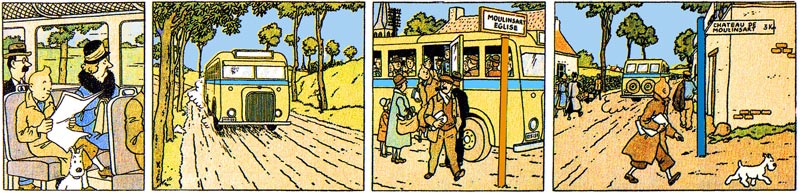 In the scene depicting the departure of General Alcazar, two boxes were cropped, and their colours changed: | |
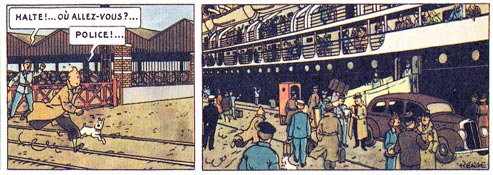 Initial version 1946. |
 Album version 1948. |
| Identifying the car on the right becomes almost impossible in the second version. | |
 Cover picture of N°19 of Journal de Tintin (click) There are three versions: The story was published in the Belgian magazine "Le Petit Vingtième" in 1939-1940, and was interrupted by the war. It resumed in 1949 in "Le Journal de Tintin", with more elaborate images and in full colour. The album was published in 1950, and was modified in a 1971 version. There are differences between the initial version published in weekly strips and the 1950 album. These differences are small except for the quality of the drawing. Here a few examples: |
|
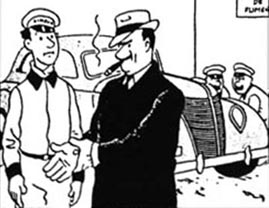 Initial version Ford V8 1937 |
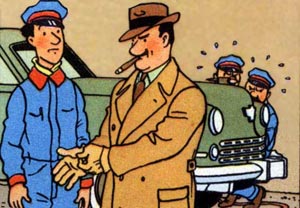 Album 1 (1950) Studebaker Commander 1947 |
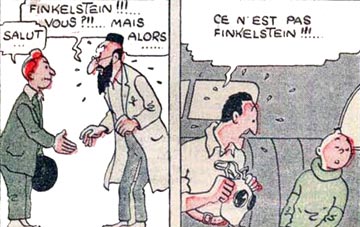 Initial version Finkelstein |
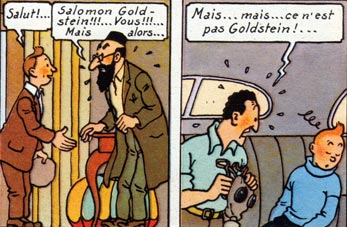 Album 1 (1950) ...becomes Salomon Goldstein |
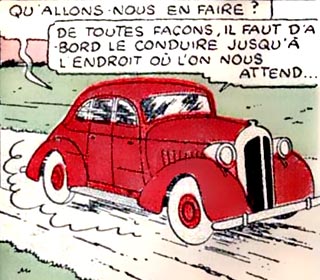 Initial version The car has no definite brand |
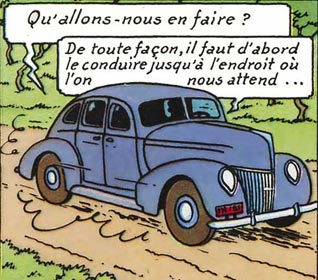 Album 1 (1950) Ford 1939 |
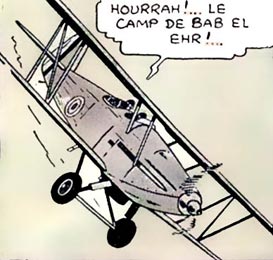 Initial version The biplane |
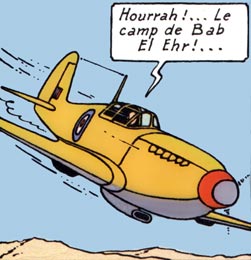 Album 1 (1950) ...is now a more modern aircraft |
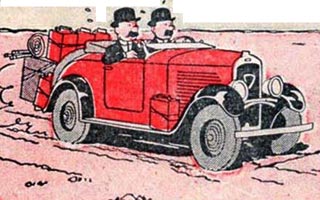 Initial version Peugeot 201 |
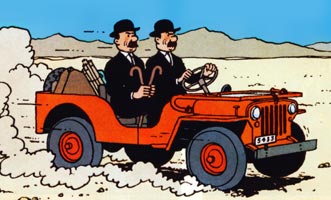 Album 2 (1971) Jeep |
| There are major differences between both versions of the album. | |
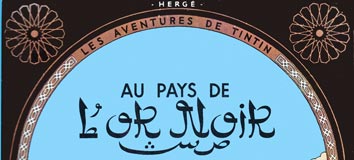 Album 1 (1950) |
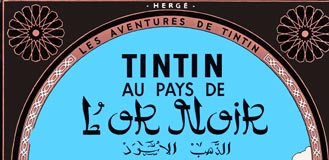 Album 2 (1971) |
|
|
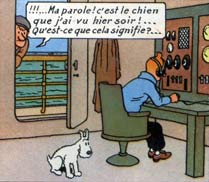
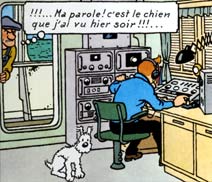
| The first 20 pages of the album have been totally re-designed. In the second part, only the texts in Arabic have been changed. Click on the picture below to see other frames of page 14. | |
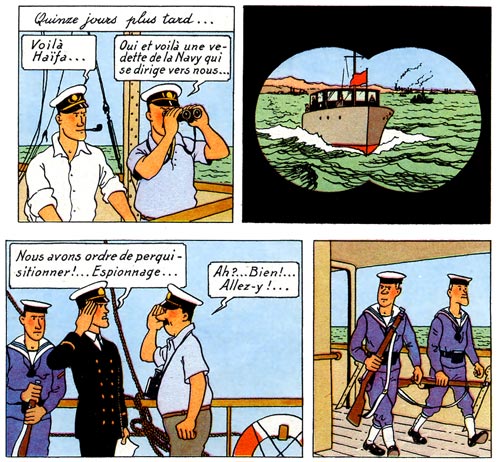
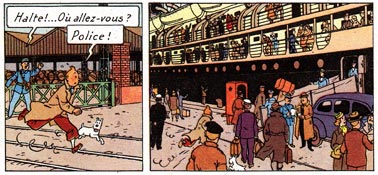
In the first version (1950 in French), Tintin's ship arrives at Haifa, and the British police gets on board. Britain was occupying Palestina until May 1948. |
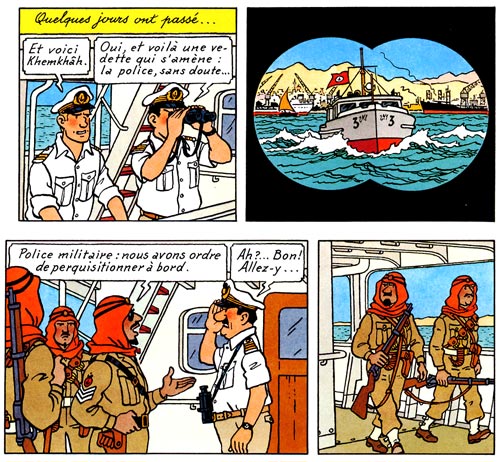
The 1971 (French) version has been re-written completely, to be more acceptable politically. The ship now arrives in a fantasy Arab country at the port of Khemkhah. |
|
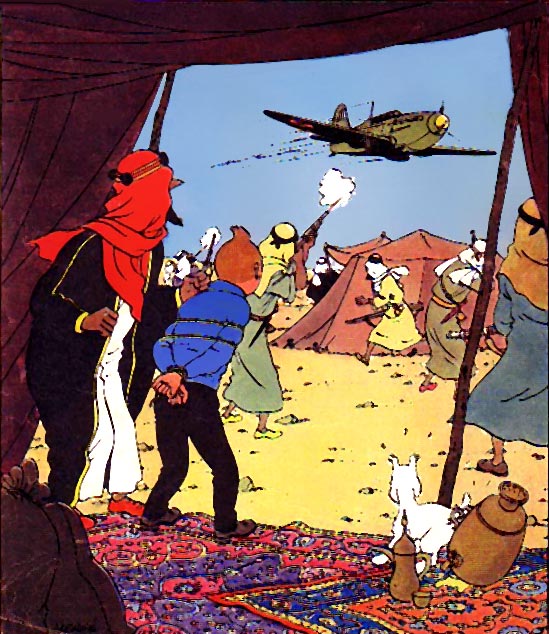
Pages 15 to 20 have also been completely changed. The scenario is modified. Hergé visibly decided to escape from the political imbroglio between the British, the Arabs, and the Jews in Palestina just before the creation of Israel. Click on the three frames to see page 16 in its two versions. |
|
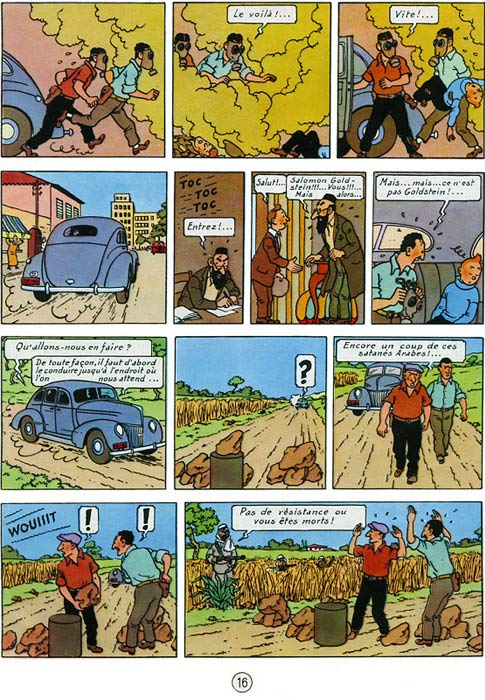 1950 |
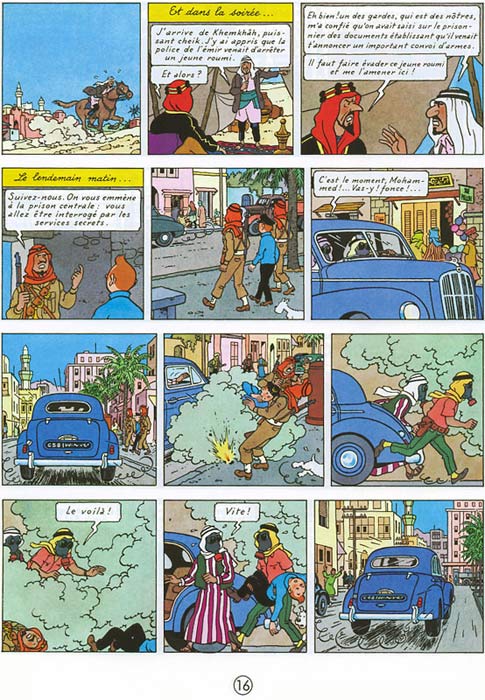 1971 |
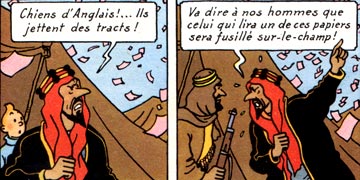 In the first version, the flyers are thrown from a British plane, and the Arabs soldiers can read... |
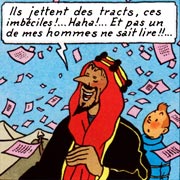 In the 1971 version, the scene is altogether different, and the nationality of the enemy is not disclosed. |
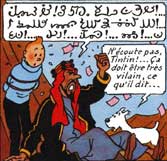 The text in the first version is not real Arabic. It just looks like it for someone who does not know. |
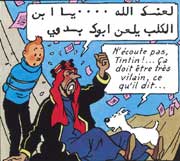 The second version is good Arabic and means: "May Allah damn you, son of a dog and your father the Bedouin !" |
| On page 9, Tintin and Haddock catch a DC 3 of Air India. Six years after publication of the album, the publisher (Casterman) received a complaint from the airline who did not like the idea of one of its planes crashing into the mountains of Tibet. Hergé then changed the company name for «Sari Airways». Curiously though, only page 28 was modified by removing the saggitarius from the aircraft's tail, but pages 9 and 58 were not changed. | |
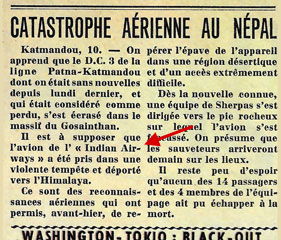 Indian Airways Initial version p.2 (1959) |
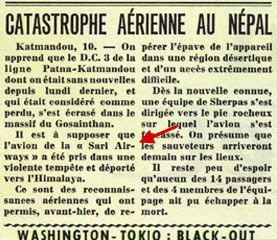 Sari Airways Second version p.2 (1965) |
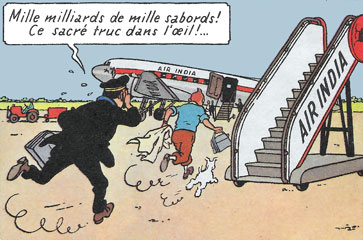 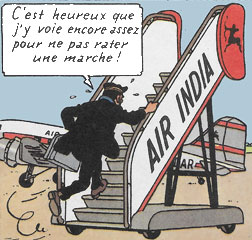 All versions p.9 |
|
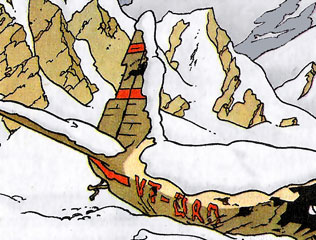 Initial version p.28 (1959) |
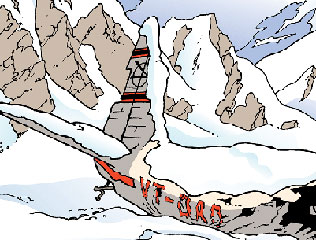 Second version p.28 (1965) |
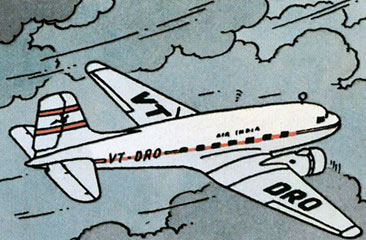 All versions p.58 |
|
 Site map |
 Home |
|